
ETIP #318
Possible 2026: Four Takeaways from a Media Perspective
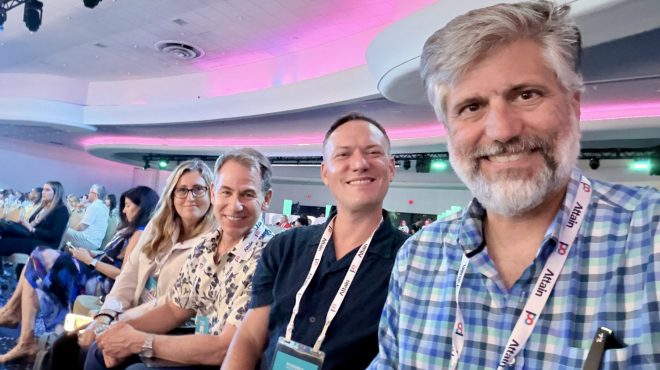
Three days. Dozens of sessions. And four different takeaways from our Starmark team. You’ve already heard from our Chief Digital Officer, Executive Creative Director and Group Creative Director. From our media department, here’s the most resonant theme: the marketing industry is at a genuine inflection point, and the gap between those experimenting with AI and those watching from the sidelines is widening fast. So, here are the four media insights that will shape our advice over the next year and a half.
The funnel isn’t collapsing — it’s getting more complex
We’ve been told the purchase funnel is dead so many times it feels like a foregone conclusion. The reality is more nuanced: the funnel hasn’t disappeared, but AI is actively shortening the distance between intent and purchase.
Research from eMarketer showed that AI search gives answers, not options — when a consumer asks Gemini for the best carry-on bag for a Paris trip, they get four curated recommendations with context, not 28 product reviews requiring 45 minutes of reading. That compression of the consideration phase is real. But what happens next isn’t what the fear-based headlines suggest.
AI-referred shoppers arrive with more intent — and they still browse, still build baskets, and still need to be influenced. And that’s because 69% of AI-assisted shoppers still prefer to complete their purchase on a retailer’s app or website. Only 10% buy through a native AI interface. Retailers control the infrastructure that makes consumers feel comfortable spending money — inventory, pricing, fulfillment — and that doesn’t change because an LLM made a recommendation.
AI may reshape influence earlier in the journey, but commerce still resolves inside retailer ecosystems.
— eMarketer, April 2026
The practical takeaway: higher intent traffic from AI referrals doesn’t mean fewer chances to influence. Track where that traffic enters your site. If you’re seeing more lower-funnel arrivals on product pages, optimize and monetize those spaces accordingly.
AI and search are merging — and both are growing
The fear that AI will kill search is also running ahead of reality. The actual data shows something more interesting: AI users are more likely to use Google daily, not less. As of April 2026, 76% of weekly AI users are daily Google users, compared to 65% of the general internet population.
Total minutes spent with Google have actually gone up as AI usage has grown. We’re in a period of choice expansion, which means you can’t just optimize for search or answer engines. Google still matters most for organic and paid, but you need to monitor and optimize for ChatGPT, Claude, Gemini and Perplexity as well.
A new eMarketer AI Visibility Index is tracking how brands show up in LLM recommendations by category. In personal care and beauty, La Roche-Posay leads with a 22% brand mention rate in ChatGPT — meaning it appears in 22% of relevant queries. Even the 10th-ranked brand, Fenty Beauty, only appears in 9% of queries. That’s how early-stage this is, and why starting GEO work now, before competitors do, is a genuine advantage.
Google’s new AI mode is a great example of why watching this trend matters in the real world. Instead of bifurcating search and its Gemini answer engine, Google has chosen to combine them into a single interface. This is a clear indication of how meaningful optimizing for answers and for conventional search needs to be the guiding strategy for marketers.

Social is still the discovery layer
Social media’s dominance in product discovery remains significant and data-backed. In June 2025, 39.2% of US shoppers said social media was where they first encountered new brands or products they went on to buy. The next closest channel is a brand’s own site or app at 27.6%. GenAI tools as a discovery channel came in at just 3.8%.
Influencer trust is also growing, not eroding. Among Gen Z (18–29), the share who have purchased something based on a creator’s recommendation rose from 41% in early 2023 to 56% by January 2025. Among adults 30+, it grew from 19% to 27% over the same period. That’s a durable structural shift, not a trend.
And here’s the new emerging trend to watch: social GEO. Every major platform is building some form of answer engine, and social content is already showing up in LLM replies. Start developing creator-led GEO strategies now, before the platforms formalize how it works and before the competition gets there first.
AI-first doesn’t mean people-last
Multiple sessions pushed back on the narrative that AI is coming for marketing jobs. The more accurate framing from the enterprise speakers: AI handles tasks and workflows, which frees people to focus on decision-making. The shift in 2026 is toward agentic workflows — where tasks are automated end-to-end — with humans staying in the loop for judgment calls.
The research finding that stuck with us: the same percentage of marketers who say governance is a problem today expect it to still be a problem two years from now. There’s no shortcut through the organizational change required to make AI genuinely useful at scale. That’s where agency value lives — helping clients close that gap.
Five actions to take now
- Track AI referral traffic as a separate channel
- Identify where ChatGPT, Gemini, Perplexity, and Claude are sending users, what pages they land on, and how they behave. This data doesn’t exist in most client dashboards yet — build it in now.
- Start GEO monitoring before it becomes urgent
- Track how your brands appear in LLM responses monthly. As an example, in the beauty sector, the top brand only shows up in 22% of relevant ChatGPT queries. Brands not appearing at all won’t be considered.
- Optimize lower-funnel product pages for AI-referred traffic
- AI-referred shoppers arrive with higher intent but still browse and build baskets. If you’re seeing more direct-to-product-page traffic, the monetization and content on those pages needs to work harder.
- Don’t abandon fundamentals for fear-based reallocation
- Historical precedent matters. Most platform attempts to own the full transaction have failed. Traditional search is flat, not declining. Follow transactions, not just attention or headlines.
- Get your team genuinely hands-on with AI tools
- Not just familiar — daily users. The gap between abstract AI enthusiasm and real operational understanding is exactly where strategy goes wrong. The people closest to the tools see the landscape most clearly.