Latest Posts

Why your company needs an AI usage policy

Artificial intelligence (AI) is the hot new topic, and we’ve written quite a bit about it – from our top tips for AI creativity to ideas for engaging customers to the best ways to harness an AI chatbot

But as AI continues to offer new tools and capabilities, it’s important to explore responsibly. Even though Starmark has built our more than 40-year reputation on experimenting with what’s next, we always use our exploration to define good rules of the road for ourselves and our clients. 

That’s why your company needs to define an AI usage policy. Clear guardrails and recommendations create an environment where your employees can test, experiment and learn without fear of getting it wrong or creating risks for the business. 

And lest you think it’s OK to leave things to chance, here are several risk factors to consider if you let AI use run rampant:

Legal concerns

One of the reasons that AI is so controversial is its potential for copyright infringement. Many popular LLMs (large language models) and AI image generators were trained on a wide array of copyrighted works. Many authors, artists, and musicians have expressed public opposition to this, and there are several lawsuits from book publishers, newspapers and record labels who believe that AI-generated works are infringing on the rights of copyright owners.

Look at it this way, being able to tell Midjourney to imagine a work in the style of Jean-Michel Basquiat or requesting ChatGPT to deliver an article in the style of Stephen King simply wouldn’t be possible without the models that power these projects being trained on these creators’ works.

Even if the prompt you enter doesn’t explicitly tell the AI tool to copy the style of copyrighted works, it most likely still relies upon the use of infringing elements — considering major players in the AI space won’t definitively state that their models avoid copyrighted works. 

This can open you up to legal liability, as using copyrighted material without permission in any commercial usage is not OK.

But that doesn’t mean use of generative AI (Gen AI) is confined to non-commercial passion projects. Adobe Firefly mitigates this risk with an image generation tool that has been trained on only public domain images and stock Adobe owns the rights to.

Bias

Depending on the data the AI tool has been trained with, it could potentially reinforce systemic bias. AI synthesizes existing content as opposed to truly thinking for itself. So in many cases, entering the word “doctor” into an image generation prompt would show primarily white males with a stethoscope, even if that doesn’t fit the need of your specific campaign or brand. More specific prompting can help alleviate this issue — but only if the humans who are part of the creative and approval processes think to manage this issue.

In addition to this demographic bias, language bias is also an issue. The most popular LLM models are primarily trained on either English or Chinese material. So while some tools do offer translation services, using one to translate your sales materials from English into another language can potentially introduce inaccuracies. And that’s not even accounting for dialectical differences between regions or countries. Suffice it to say, Generative AI is not a viable substitute for a professional translator in public-facing work.

As you craft your AI experimentation policies, be sure to include sections on mitigating biases — while outlining a clear framework where employees can try the tech for internal purposes versus commercial or customer-facing uses.

Privacy and protecting internal data

So, if there’s one piece of information here that should tell you how important it is to have an AI usage policy in place, let it be this tidbit. Because an effective AI usage policy will specify which tool(s) are allowed to be used by your employees — and with what types of information.

Most public LLMs, such as the freely accessible version of ChatGPT, will train themselves on any information a user submits. 

Yes, that’s how it works. Seriously. 

Translation: anything your employees put into that query or prompt bar becomes fodder for a language model you have no control over or oversight into. And if this data is not meant to be public, it can be a major problem. 

The terms and conditions of different AI tools lay out rights and permissions based on use. And the solution to this glaring security hole is typically to use a paid version of the service (which promises not to use your input for training data). Heck, you can even create custom AI tools that are trained specifically on proprietary assets, which would generate results more suited to your needs than general models. 

And, sure, using your company’s paid version or custom-trained model of ChatGPT avoids this unfortunate problem — but how can you expect an intern on his first day to know he needs to use our special version of ChatGPT versus the ChatGPT he already has bookmarked in his browser? 

This is why written AI usage guidelines are so essential. They give you the ability to dispel these types of misunderstandings before your very private data becomes public data.

The hallucination problem

Once upon a time, mankind used the hallucinations of ascetics, sages and prophets to guide the course of our destiny. And hallucinations today are still valuable. They can show truth in a way that’s not possible within the realm of conventional reality. But what’s useful on an individual level doesn’t translate to the corporate world. Just like you wouldn’t want your brand-responsible art director working while on DMT, you don’t want an AI model generating hallucinations that are then sent out to your clients or customers. 

Hallucinations are the byproduct of the way LLMs make inferences based on available information. Sometimes they’re funny. Sometimes they’re trippy. Sometimes they’re deeply upsetting. In all cases, they’re not the type of work product that’s ready for the rest of the world to see. If AI-generated work is sent directly to a stakeholder — or released publicly — without additional review and editing, it can have a disastrous effect on your brand reputation.

Just like the work product of a new team member, AI work product should be thoroughly vetted. The only difference is, unlike a human employee, an AI model might never be able to function without this level of oversight. 

As you’re experimenting, make sure your oversight process is clearly outlined in your AI usage guidelines. Not only is it going to make sure public-facing images created with Midjourney don’t contain any gibberish text in the background, it’ll make sure your content is actually effective at persuading humans.

What an AI usage policy should include

If you’re not yet convinced you need an AI usage policy at your company, there’s simply no helping you. But for the rest of us, here are some vetted recommendations for a standard AI usage policy that you can use as a starting point.

  • Specify when and how data should be used in a LLM or other AI tool. With a subscription plan, it’s possible to create an API path for a tool like ChatGPT that protects your company’s data from being used to train the publicly available large language model. You can also create an entirely custom-trained in-house model using your own data set as the exclusive training data. These two methods protect your data security in a way that entering queries into public tools does not. Make sure to avoid using confidential information, such as company salaries, client research or anything subject to an NDA, in any tool that does not have a private data path.
  • Ensure sufficient human authorship examples to guide future work.That’s the standard for copyrightable work. In instances where you’re using AI-assisted work for commercial purposes, it’s best to err on the side of caution and ensure any final draft includes no AI assistance, even if an early outline or draft was created with the help of AI. 
  • Direction on which tools can be used — and where. The output quality and data training methods of some tools (in particular tools you pay for and have vetted) are probably acceptable to use in commercial applications. On the other hand, some tools, like the free version of ChatGPT, use the data entered to train their models and shouldn’t be used with proprietary company data. Always make sure you specify tools for different uses and make it crystal clear which ones are for internal use only. 
  • Be open to feedback and suggestions from employees who want to pilot a new tool for work, so it can later be added to the list of approved tools. As the market changes, it’s a great way to consistently test and vet new tools that can improve your workflow.
  • Create a review process to make sure that AI-generated content is accurate and fair. This can avoid distributing potentially harmful hallucinations or biased imagery that may not properly reflect your company’s values.
  • A commitment to disclosure when AI is used. Some governmental bodies, such as the EU, have already passed legislation that requires a disclaimer be shown whenever AI-generated content is used in an advertising setting. Wherever you are based, honesty is the best policy.

If you’d like to discuss starting or expanding your company’s use of AI, get in touch.

Building a Brand Bridge to Consumers with AI

It has been a minute since we published our eTip on 6 Ways To Boost Creative With AI, and we can assure you our experimentation with AI is on the rise as we find new ways to harness it as a conduit for creativity — and connection.

So, without further ado, here are several ways you can use AI to build stronger connections with customers:

Customer Service and Personalization

While AI chatbots and virtual assistants have been around for some time, we’ve seen an evolution with their ability to analyze customer feedback and understand human sentiment. Incorporating an AI chatbot on your site can give your customers an instant, always-on customer service channel – an effective way to drive them further down your purchase funnel or helping to retain existing customers with useful answers when and where they’re needed. Take a closer look at your customer journey map to find an opportunity where an actionable AI assistant can revolutionize your CX strategy – from recruiting students to enrolling patients to onboarding cruise passengers.

Case in point. Wavemaker UK and Voxly Digital launched an AI virtual guide for The Royal Navy to help candidates discover their most suitable role and to assist them throughout their application process. Royal Navy candidates were able to self-select one of six guides and then ask open-ended questions using real language. The language model was able to then provide custom recommendations in real-time. By tailoring the recruitment process to the individual, the UK government began attracting a more diverse audience while also increasing conversions.

Predictive Analytics

AI can be used to predict customer churn by identifying at-risk customers so that you can then woo them through retention strategies. The flip side of this coin is predicting demand. AI can also analyze historical data to project future customer behaviors.

According to ADWEEK, Hershey’s deployed custom algorithms to optimize ad placements for their Halloween campaign to ensure maximum engagement and ROI. Using AI, they were able to serve more ads to markets where candy sales were lackluster and fewer ads where Hershey’s was already selling like crazy. All in real time. Not only did they sell more candy, the approach gave them the upper hand in negotiating their retail media spend. How’s that for sweet success?

Content Creation

These days, it takes a lot more than display advertising to convert prospects and bring new people into the funnel. That’s where content comes into play. AI can be used as part of a powerful content strategy to build brand engagement beyond the typical digital ad campaign. Marketers can tap into a host of tools to deliver content at the speed of life, from video, blogs, social media updates, A/B testing and more.

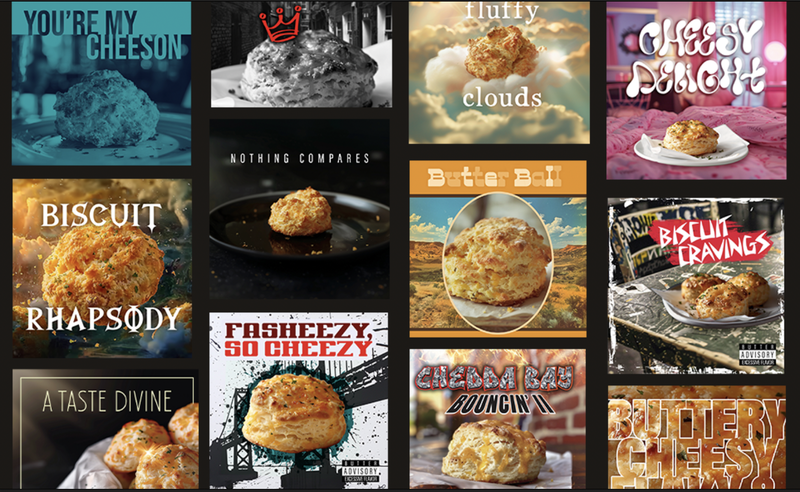
Cheddar Bay I Thunbmail 2 v2.width 800
Image Credit: Red Lobster®

Red Lobster dropped some “freshly-baked beats” to unite their biscuit lovers through music with their Cheddar Bay-I campaign. Superfans of Cheddar Bay Biscuits® posted enough social content, where an AI model could be trained to generate “cheesy” love songs across multiple music genres. The 30 mixes, all composed and performed using AI, played over images of biscuits. The full list of pop, jazz and rock tracks were featured on Red Lobster’s YouTube channel and served up as a countdown to National Biscuit Day. This kind of engagement would not have been possible by running traditional ads alone.

Customer Insights

Identifying consumer behavior patterns is a great use case for AI because analyzing data sets is one of its core strengths. Simply put, AI can help you define which customers you want more of – and those you do not. And once you have this knowledge, you can begin segmenting your audiences based on their behaviors versus less valuable data, such as demographics.

Enhanced Customer Experience

AI is fertile ground for dialing up the guest experience. From voice recognition to image recognition to virtual reality, with imagination and ingenuity, AI can be your catalyst for creating immersive brand interactions.

ask dali
Image Credit: Goodby Silverstein & Partners

St. Pete-Clearwater’s Dalí Museum and its agency Goodby Silverstein & Partners created
Ask Dalí using a large learning model (LLM) to recreate Salvador Dalí’s voice so that visitors can actually chat with the artist. Imagine asking about the most intimate details of his work and being answered in the voice of the great master himself. That’s a pretty powerful experience — especially when the AI experience is being delivered through a “lobster phone” replica from one of his surrealist works of art.

Social Media Monitoring

So many platforms, so little time. AI can be used to help marketers stay on the pulse of social trends. Let’s say you’re working on an enrollment campaign for a college and you’re looking for emerging trends to better resonate with young hopefuls. AI can provide a snapshot of your Gen Z audience, along with shifts you may want to consider for your marketing efforts (i.e. engage in their DM’s, run longer videos, utilize TikTok and Insta for search; and play up 90’s nostalgia.) AI can even identify key influencers to collaborate with to amplify your campaigns.

Your AI Adventure Awaits

At the end of the day, regardless of the industry or vertical, we are all looking for ways to entice consumers to spend their much sought-after time with our beloved brands. If your marketing strategy could use a little lift, consider an AI component at the roadmap stage. When used in novel ways, AI can be that springboard for creating brand experiences that build deeper loyalty.

If you’d like to learn more about AI or run an AI experiment to help achieve your goals, get in touch.

Nine surprising ways an AI chatbot for your site can save time and boost sales

Adding an AI chatbot to your website isn’t a one-size-fits-all decision. In fact, there are many purposes a bot can fulfill to enhance the visitor experience, streamline operations and add functionality. As you consider adding a bot to your site, here are some of our top recommendations to get you started.

Answering FAQs

No surprise, adding the ability to give instant replies to common questions is one of the most popular and most time-saving functions for an AI-enabled assistant on your site. It decentralized the FAQ function of your site, so there’s no need to click to a certain page and scroll to a certain function to find an answer. The user can simply ask the bot a question, no matter where she’s browsing on your site.

Pro tip: you can also use the questions people ask to continually train the learning model to update and expand its knowledge base with new frequently asked questions. These frequently asked questions can also become an engine for new content ideas.

Customer Service

Offering real-time assistance to site visitors can help resolve common problems, direct them to the appropriate resources, or even help more quickly connect to human support. This ability to rapidly resolve issues can save massive amounts of time from customer service staff who would normally need to help a customer or visitor.

Informational Guide

Do you have information about your tourism destination you want people to know? An AI chatbot can provide information about attractions, activities or upcoming events. The AI assistant can serve as an expert to help your visitors plan a trip, including recommendations on where to eat, shop and explore.

Hint: the same principle holds true for producers of products or services and for colleges. Imagine having the expertise of one of your product design experts, sales people or academic advisors on hand for every visitor. That’s what’s possible.

Sales Assistance

Keeping with the example of a tourism destination, An AI chatbot can also help visitors find and book accommodations based on their preferences, budget and any number of other criteria. This functionality also works great for product comparisons or finding the right service to meet a site visitor’s needs.

Event and Activity Reservations

It’s not just sales. Booking events, tours and activities can all be managed via a chatbot, too. If you’re a service provider, appointment bookings are also a great application.

Personalized Recommendations

An AI chatbot can create customized travel itineraries based on user interests, date of arrival, duration of stay and other information. This can include suggesting restaurants and cafes that match the user’s taste, budget or dietary restrictions. Same goes for appealing activities and events that may be going on during their visit.

Feedback Collection

Versus standard site session feedback collection, an AI bot can collect and parse more granular feedback on a wide variety of interactions. This can even extend beyond the site. Your AI chatbot can collect feedback about IRL experiences in your destination or with your service that you can use to improve your offerings.

Stay Current

Recent news, blog posts and the latest updates can all be communicated by an AI chatbot. This could also include timely information, such as a weather update or emergency situation, that is relevant to visitors.

Language Translation

Offering real-time translation services to cater to international visitors, making the website more accessible. Using an AI bot for this functionality, versus the Google Translate button, can be a more dynamic and intuitive way to meet the needs of your overseas site users.

If you’re considering adding an AI chatbot to your site, just be aware that results will only be as good as the material you use to train the AI model. Detailed and thorough training is critical to the success of your program.

With a properly trained model, you can create a successful bot to handle any of the features above (or all of them!) in a way that aligns with the specific objectives of your site and with your overall business direction. It’s a great application for an emerging technology to help save time and money while creating a better experience for your visitors.

Follow That Link! Why You Need SEO-Friendly Anchor Text

Anchor text — the visible, clickable text of a hyperlink — is probably something your average website visitor never thinks about as they’re reading a web page. If it’s relevant to their interest, they’ll feel compelled to click on it for some other destination on your site or the wider web. On the other hand, if someone just scrolls past that familiar blue type, or they click it and bounce, that means the anchor text isn’t doing its job effectively.

Good anchor text is important to your SEO strategy because it works on the page and also behind the scenes to tell the user and Google, respectively, something about the page you’re linking them to. When a reader sees the anchor text “Gen Z guide to TikTok” laced into a Starmark.com article about strategic thinking, she understands what she can expect to find if she clicks that link. Likewise, when Google crawls that same page, it’s using the companion hyperlink (<a href=“https://www.starmark.com”>Gen Z guide to TikTok</a>) to find other pages on the Starmark site.

Why it’s important to get it right

As we explained in the vintage eTip “Anchor Text: Link Building Done Right,” you don’t want anchor text to be too generic or too narrow. “Click here” and “Download here” don’t tell a reader who’s simply browsing your site anything useful at a glance. It also doesn’t convey any useful information to Google.

On the other hand, anchor text can also be too ultra-specific. Google isn’t a big fan of “exact match” and “phrase match” anchor text, in which the anchor text is the specific keyword or phrase you’re targeting, such as “Georgia schools near you” or “Florida vacation hotel deals.” (Plus, these keyword speed bumps disrupt the flow of the copy when a real human is reading it.) Basically, use keyword-rich anchor text sparingly, or Google will think you’re being spammy.

Good anchor text is descriptive, relevant and gets to the point. When users see the anchor text, they should have a very good idea where the link will take them, like in this example from the Art Lovers Itinerary on our client’s website, ameliaisland.com:

To Know Us Is to Love Us

Also on 3rd Street is the Amelia Island Museum Of History. To understand a little more about our island paradise, you’re going to want to take a docent-led tour inside the museum or walking tour around downtown. Truth is, we have a few dark secrets here that don’t always coincide with the gorgeous place you see today but pair those secrets with some amazing historical figures and you’ve got quite the storied island! Soak it all in then head over to the Welcome Center where you can pick up brochures and see all eight flags that we’ve flown under! If that just whets your whistle for more history, view all of our island museums and make a day of it.

It’s well-known that Google uses anchor text as one of its ranking signals, which are characteristics used to determine the position of a website in a search engine. That’s why anchor text best practices should definitely be part of your SEO strategy. Go through your website and see where you can optimize. It’s low-investment with high reward.

If you’d like to learn more about Starmark’s tips for optimizing your website, get in touch.

The Power of Customer Conversations: Why Every Team Member Should Speak with Your Customers

In today’s business world, customer experience (CX) is king. No longer is CX just a daily consideration for sales and support teams. Now, it’s a collective effort involving every member of any organization, from marketing and product development to finance and front-line workers.

For workers who regularly interact with your customer, CX thinking may come naturally. But for those who don’t, one incredibly powerful way to boost CX is through direct customer conversations. Here’s why everyone in your company should be talking to your customers.

You don’t have to rely on guesswork

Most businesses make guesses about what customers need or want. This often leads to focusing time and effort on the wrong areas. By listening carefully during customer conversations, your team can identify recurring issues that conventional data collection and analysis alone might miss. Regular chats with customers help challenge old assumptions, ensuring your decisions are based on real insights, not just guesses.

You can uncover the full picture

Data is crucial, but without personal interaction, it can be hard to get the full picture. Listening to how customers talk helps your team use their language in marketing and sales, making your brand personality and messages more relatable. Putting a real face and voice to your customers also helps your team foster a sense of ownership and pride in their work, no matter how they contribute to the overall experience. Not only that, internalizing those conversations means your team can start thinking from the customer’s perspective.

You can create customer-centric workplace

A customer-focused culture is key to long-term success. When all team members engage with customers, it creates a unified effort to prioritize customer satisfaction. This collaboration helps your business move together in one direction, rather than dividing resources and effort less effectively. These conversations also build essential communication skills, like active listening and empathy, that can help your team anticipate problems before they arise.

You can inspire fresh thinking through customer feedback

Customer feedback is a goldmine for innovation. By paying attention to what customers want, your team can come up with creative solutions that truly make a difference. This listening exercise can even inform your highest performing content. Listening well is crucial for any successful business, yet many large companies don’t do it effectively. Focusing on a customer-centric approach encourages critical thinking and proactive problem-solving, keeping your business ahead of the curve.

Exceptional experience is the key to revenue growth

The ultimate goal of talking to customers is to boost your business’s bottom line. By delivering top-notch experiences based on direct feedback, you can attract new customers, keep existing ones happy and increase their lifetime value. This approach not only improves customer satisfaction and loyalty but also drives revenue growth, positioning your business for long-term success.

Start the process

Ready to get started? Begin by mapping out your customer’s journey through these phases: assess (research before purchase), admit (acknowledge the need for your product), affirm (reinforce the purchase decision), activate (receive the product), acclimate (integrate with the product), accomplish (fulfill the product’s promise), adopt (embrace your company), and advocate (become a raving fan). Following these steps will help you create top-notch experiences, boost profits, and build lifelong customer relationships.

Starmark Deepens Its Metaverse Leadership with ENGAGE XR Certification

Starmark is proud to announce its recent accomplishment as an ENGAGE XR Certified Developer. This prestigious certification showcases Starmark’s expertise creating metaverse environments, experiences and advancements that defy expectations.

Users are active participants instead of passive viewers, like in a typical Zoom. Our ENGAGE XR certification is more than an accolade; it’s a commitment to being at the forefront of business in the future.

— Brett Circe, Chief Digital Officer at Starmark

Starmark selected ENGAGE XR as its metaverse development platform of choice for its exceptional flexibility and versatility. In the words of Starmark Chief Digital Officer, Brett Circe, “Where ENGAGE stands out from other metaverse platforms is how many tools and abilities it gives us to create different experiences for a range of clients that runs from Florida attractions to tech companies to colleges.

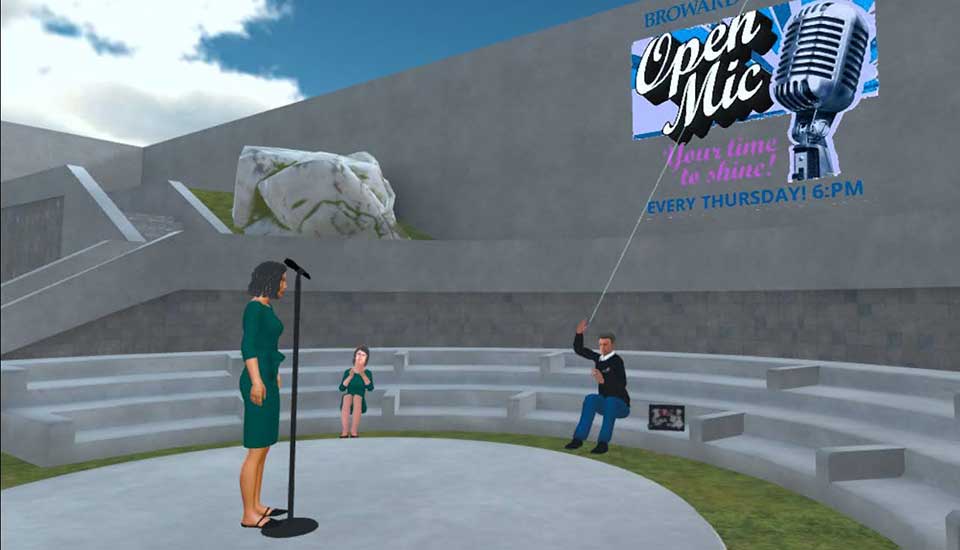
  • Broward College

  • Broward College

  • Broward College

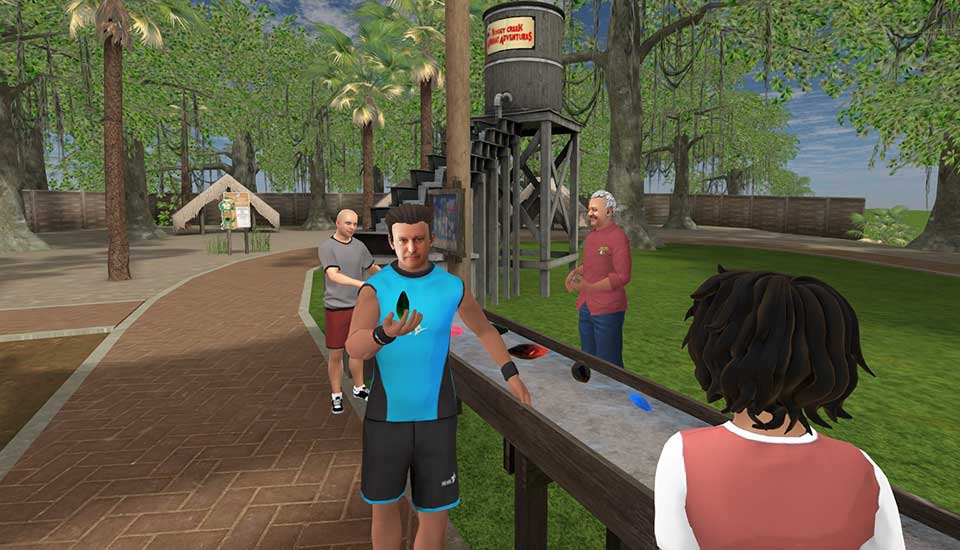
Long before the term ‘metaverse’ became an entry in most people’s tech lexicons, Starmark was pioneering the use of augmented and virtual reality to create experiences that couldn’t exist otherwise — transcending both time and space. This included an early foray into augmented reality for SeaWorld Antarctica: Empire of the Penguin in 2012 and our more recent partnership with Boggy Creek Airboat Adventures. For Boggy Creek, Starmark harnessed VR technology for B2B sales — transporting prospective travel planners and tourists directly into the heart of Florida’s natural beauty.

  • Boggy Creek Airboat Adventures

  • Boggy Creek Airboat Adventures

  • Boggy Creek Airboat Adventures

  • Boggy Creek Airboat Adventures

The immersive VR experience now provides the sales staff the unique capability to conduct real-time, interactive sales demos with travel planner partners anywhere in the world. Not only is it a more compelling firsthand look at what guests can expect, it’s also a more economical and scalable alternative to conventional familiarity trips, also known as fam trips.

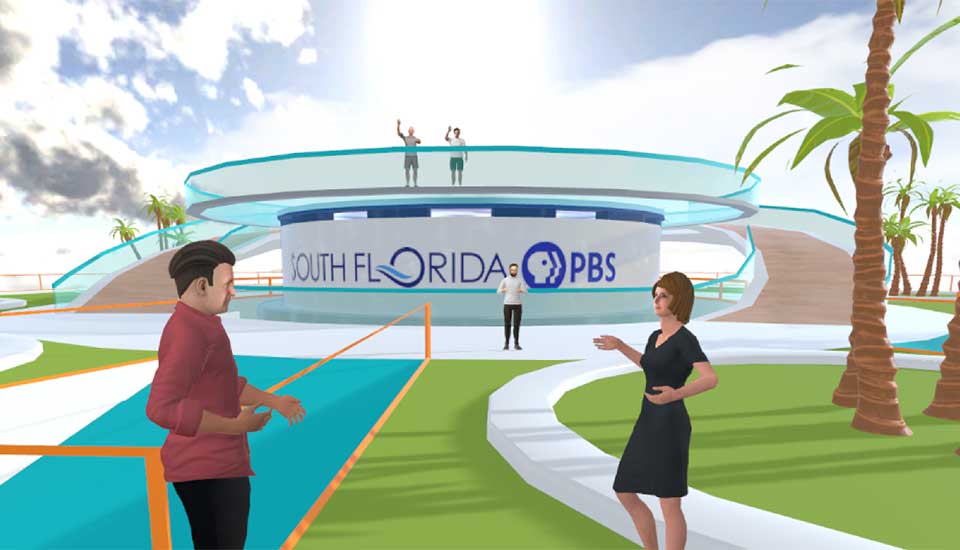
Starmark is expanding deep into mixed reality development for a variety of clients in B2B, Education, Healthcare, and Travel & Tourism to explore augmented reality (AR), virtual reality (VR), and artificial intelligence (AI). These partnerships aim to harness XR technology to drive the bottom line for businesses both in revenue growth but also in reducing sales cycles and travel costs.

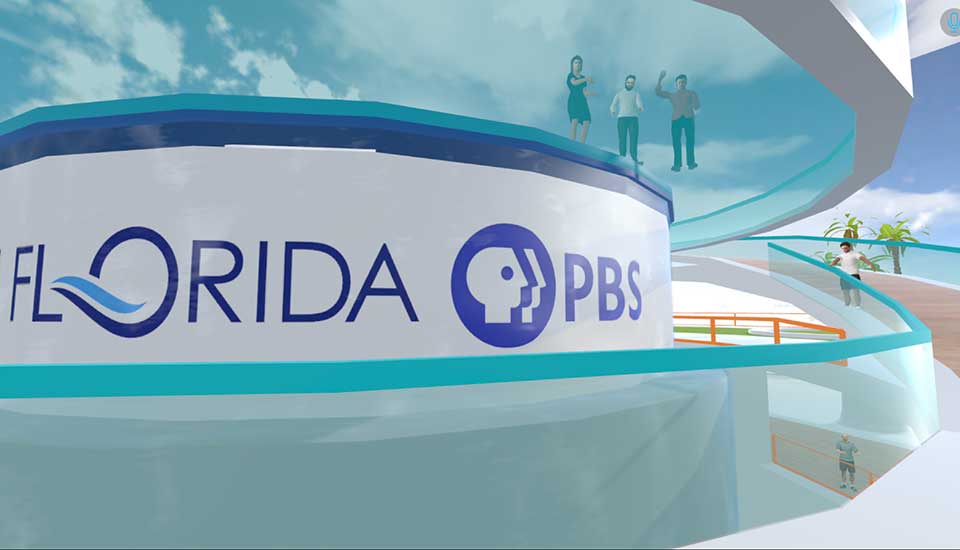
  • South Florida PBS

  • South Florida PBS

  • South Florida PBS

“Mixed reality will redefine virtual sales meetings, hands-on education, and even mental wellness,” said Brett Circe, Starmark’s Chief Digital Officer. “Users are active participants instead of passive viewers, like in a typical Zoom. Our ENGAGE XR certification is more than an accolade; it’s a commitment to being at the forefront of business in the future.”

As we venture further into the metaverse, Starmark is excited to continue shaping the future of digital interaction, armed with creativity, technology, and this additional ENGAGE XR certification.

Roadmapping a Success Story for Commute Broward

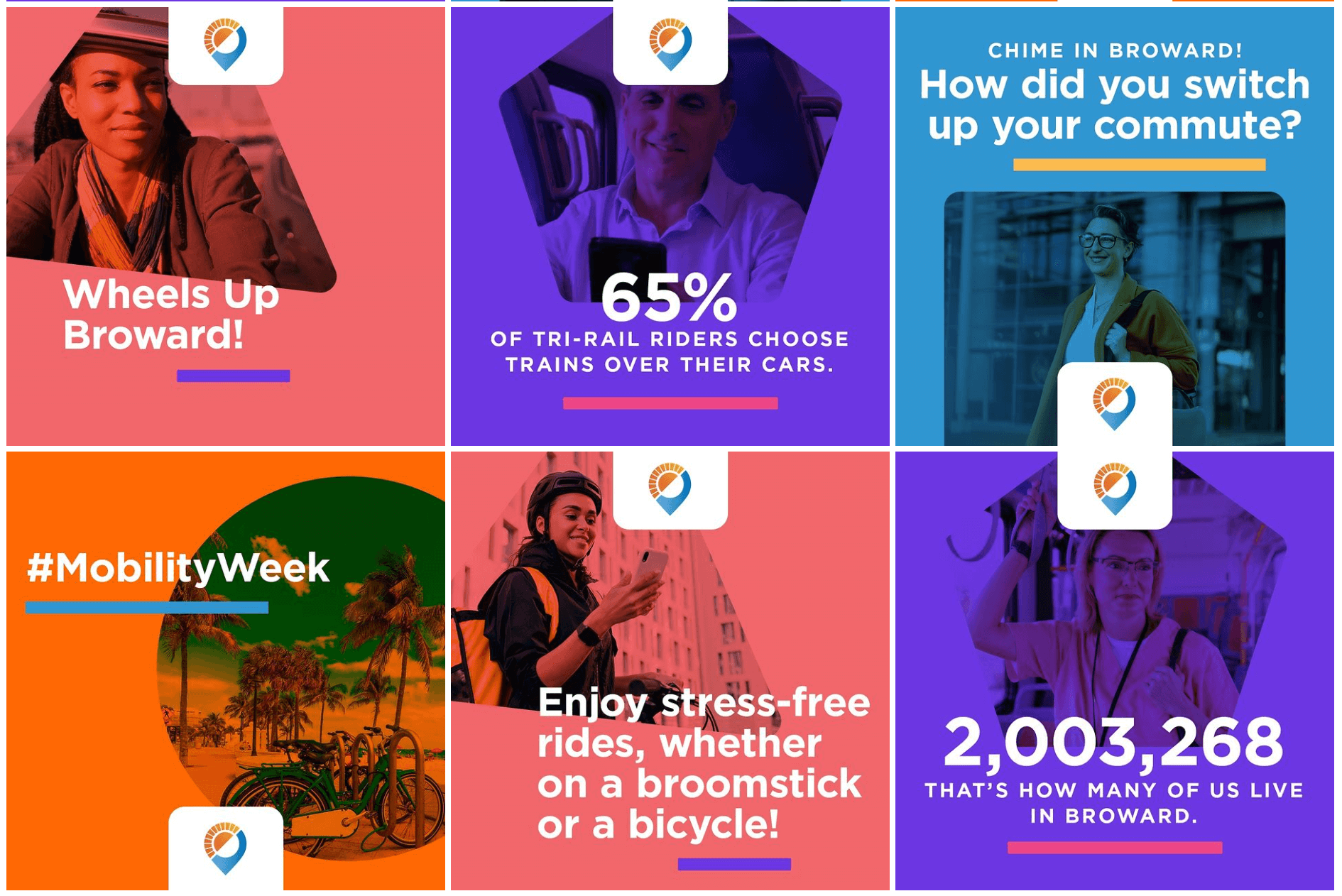
Working together with the Broward County Transportation Management Association, Starmark created the new Commute Broward website to help more of our neighbors discover more interesting ways to get around.

The new site addresses a big gap: before this there was no single source of good information for how to get around our county. Now we’ve created one simple map of all transportation options than any resident can use — on any device.

There’s more to life than traffic

Broward County has a population of more than two million people, but unlike other major metro areas, online info sources about transit hadn’t kept pace with the options available. In other words, Google Maps and other mass-market mapping solutions didn’t include any data or route information related to alternative modes of transit in Broward County (community shuttles, micro-transit, walking, last-mile scooters and bike rental locations).

Closing that information gap was part of a county-wide Transportation Demand Management (TDM) strategy to educate and encourage travelers to look at alternate transportation options. We wanted to bring our neighbors better mobility, more affordability, less congestion and reduced vehicle emissions, and, ultimately, the goal was to make every trip better while making our entire transportation system better.

Mobile UI Elements

Mobile UI Elements

Building a better commute starts with a better map

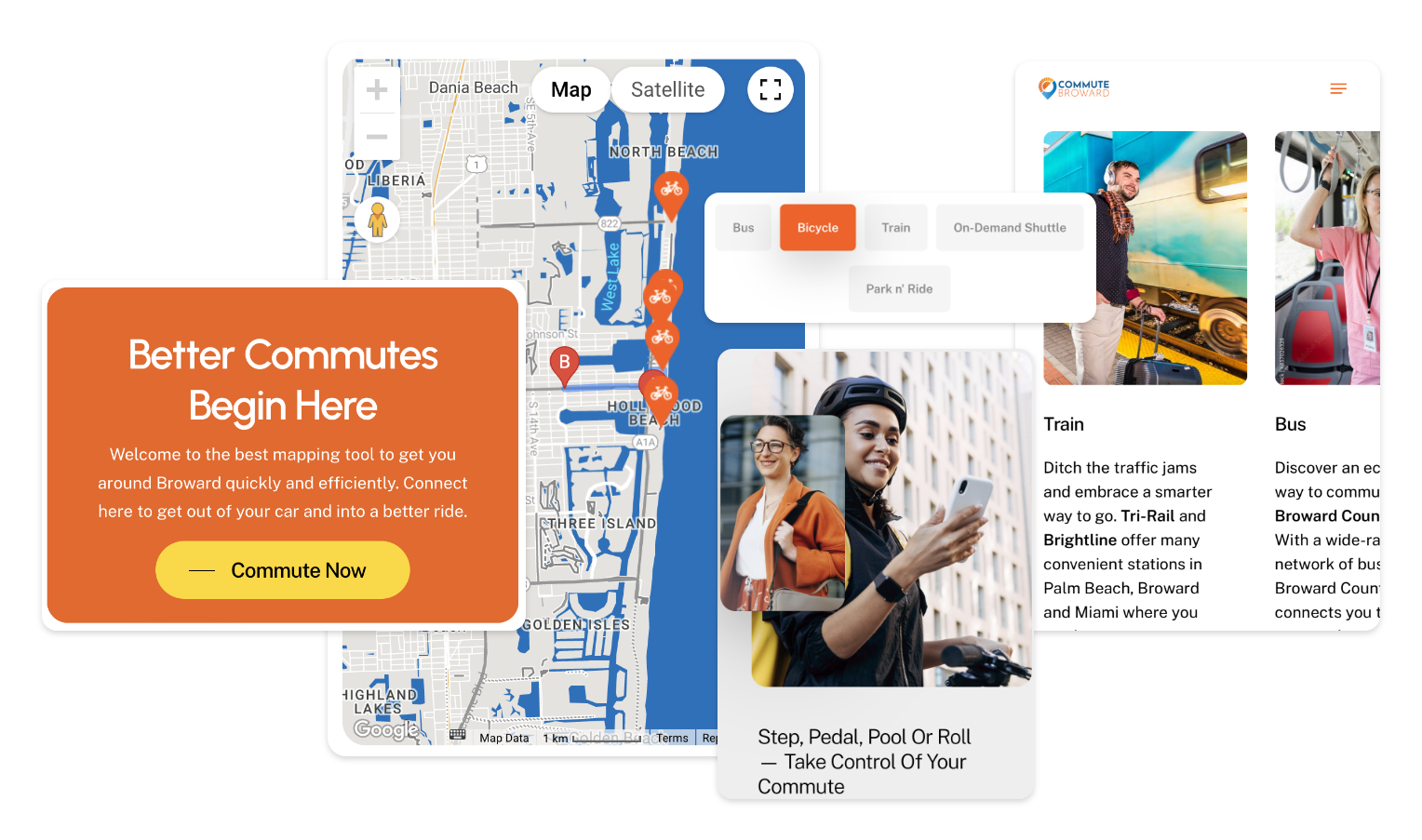
Starmark created a new site focused around a better commute, featuring a map integrating GIS data, Google’s map data and proprietary local data.

The outcome is a single, best place to plan any trip — to or from anywhere in the county.

The design was rigorously economized and simplified to create an excellent user experience on any device and ensure compliance with Google’s new user experience and site speed criteria for search rankings.

Local TDM programs like Commute Broward are a crucial strategy for meeting U.S. climate targets and align with the MPO’s vision for a more connected community.

— Gregory Stuart, TMA Board Chair and Broward MPO Director

The result is a mobile-optimized elegant site that puts the visitor’s primary need front and center, while also delivering useful information about alternative commuting strategies.

Interactive Route Map

Gregory Stuart, TMA Board Chair and Director of the Broward Metropolitan Planning Organization (MPO), shares that, “This expansion and program launch represent a significant milestone for us. We are dedicated to improving the daily commute experience for all. Local TDM programs like Commute Broward are a crucial strategy for meeting U.S. climate targets and align with the MPO’s vision for a more connected community.”

Expanding this effort

The site is built for growth and expansion. Our roadmap includes plans to create a custom map functionality employers can use to create ideal commuting strategies for employees, as well as incorporating additional data to make the map even more robust.

Social Feed TMA

From Single Fundraiser to Strategic Mindset Shift

Joe DiMaggio Children’s Hospital, a top-tier specialized pediatric facility, relies heavily on donor generosity to save and heal children. As research, surgical technology and treatments rapidly evolve, saving lives requires continuous funding. Sporadic one-off fundraising initiatives are rarely enough, no matter how successful each may be.

So when Joe DiMaggio Children’s Hospital asked Starmark to create its newest fundraising campaign, we aimed higher: empowering JDCH to reap the rewards long after the initial campaign’s conclusion.

Diagnosis: Bigger Brand Impact and Year-Round Inspiration

Joe DiMaggio Children’s Hospital (JDCH) in South Florida is a nationally recognized specialized pediatric healthcare leader. Their team handles 360,000+ patient encounters annually. As South Florida’s healthcare demands rapidly outgrew the hospital’s available resources, its leadership launched a five-year capital campaign to raise expansion funding. The need: four additional hospital floors; new medical technology and treatments to improve patient outcomes; and greater support for families and underserved communities.

Treatment Plan: Convey JDCH’s Life-Changing Impact to Boost Donations

Starmark developed and implemented Catch The Love: a multi-channel effort to support the foundation’s fundraising campaign. However, it was built to be much bigger in scope. Catch The Love shifted the mindset, instilling a more proactive culture of year-round giving internally and externally. The goal was to embed a 365-day philanthropic mindset in donors, staff, hospital partners, patients and families.

Stirring visuals and emotional messaging showcased the life-changing impact of JDCH’s specialized capabilities on thousands of Florida families and those traveling here from other states/countries — and the need for continual support to keep saving more lives. A photoshoot fueled the campaign and all supporting content needs.

Campaign Photography web

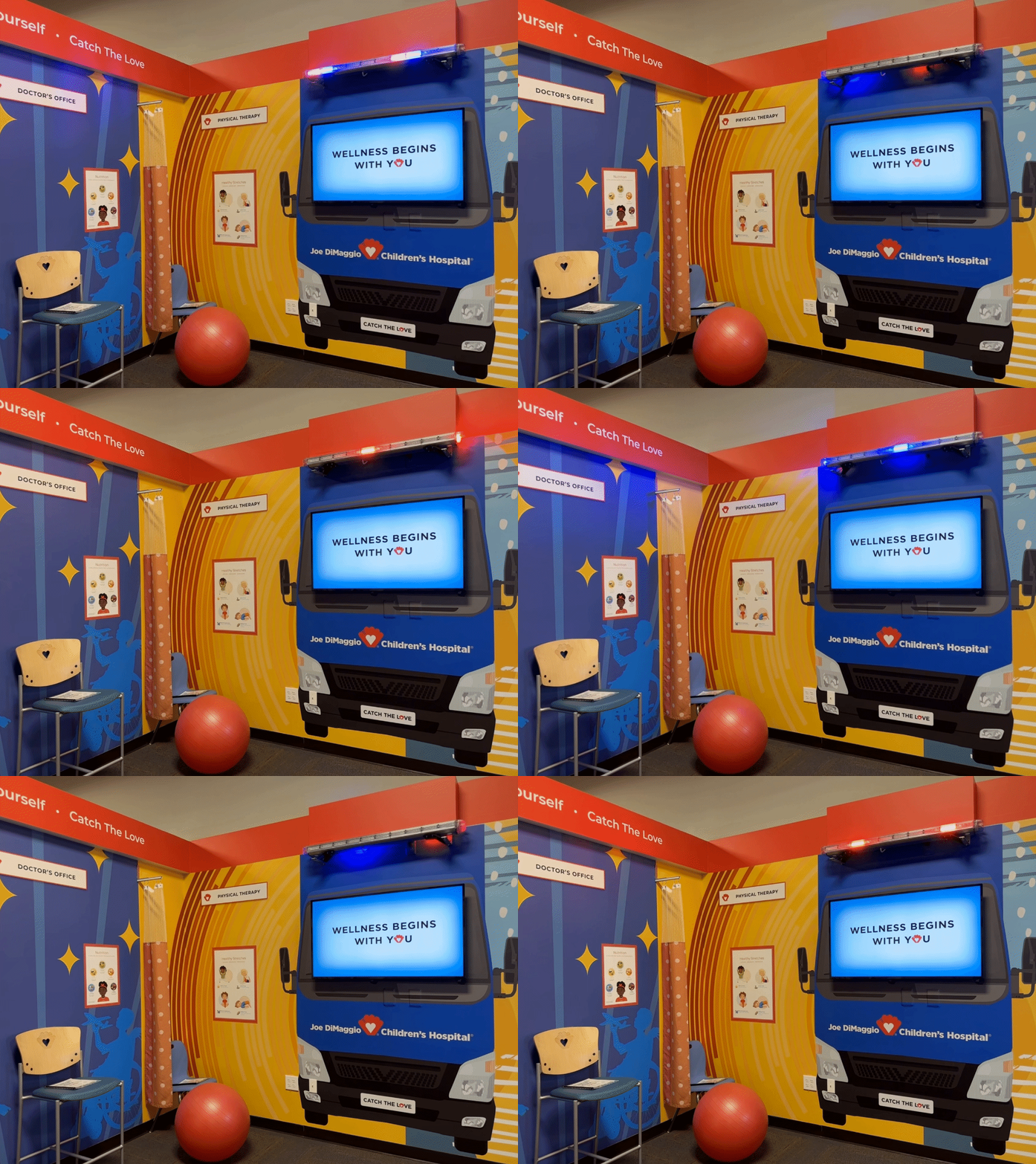
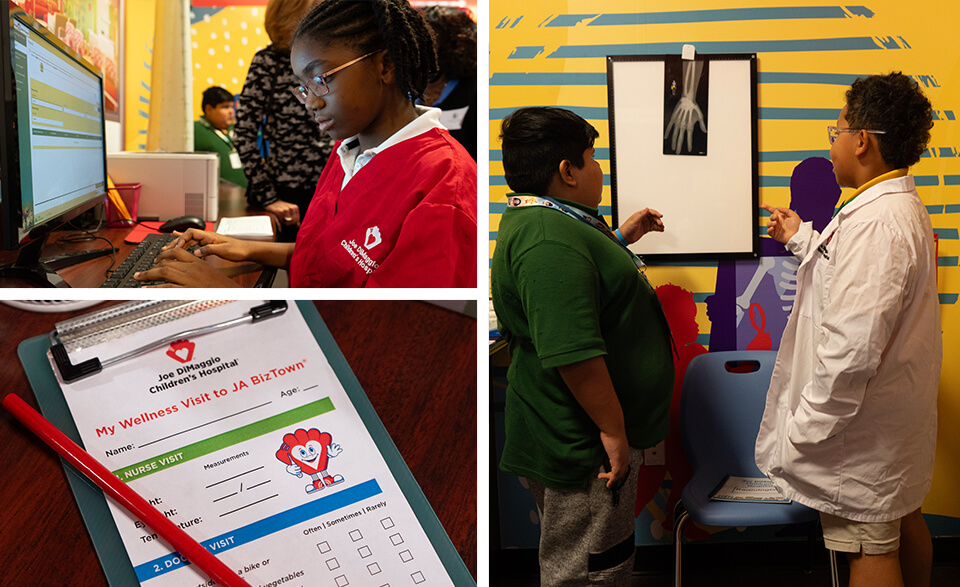
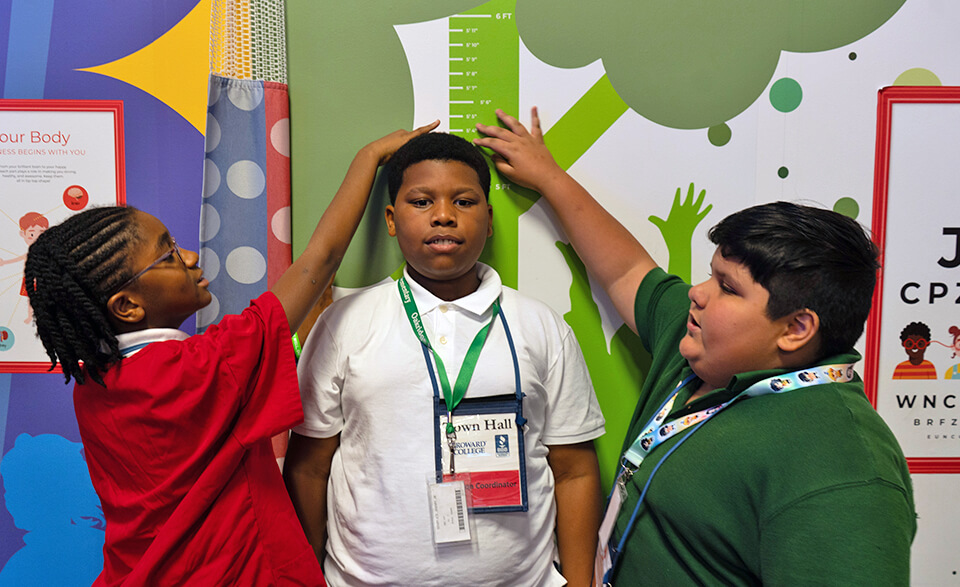
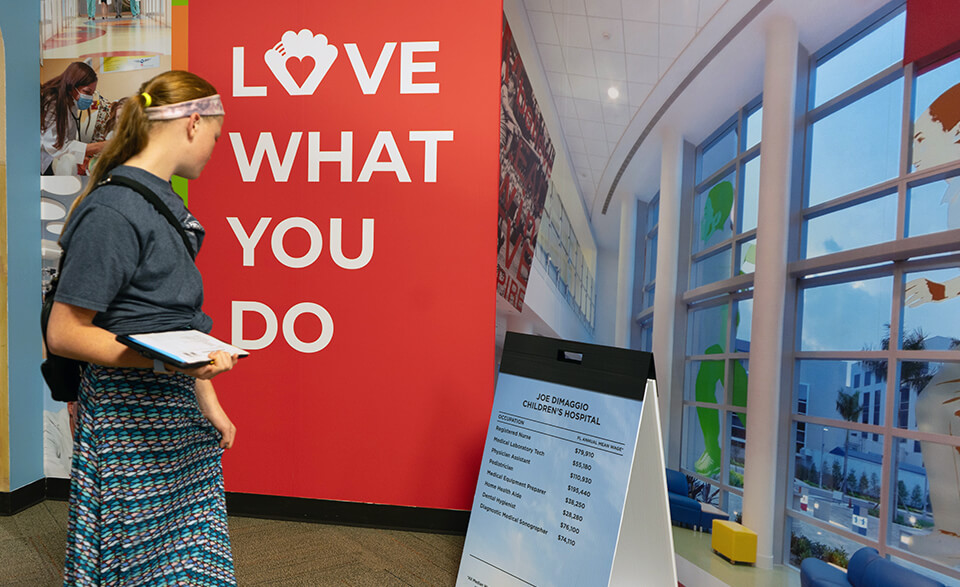
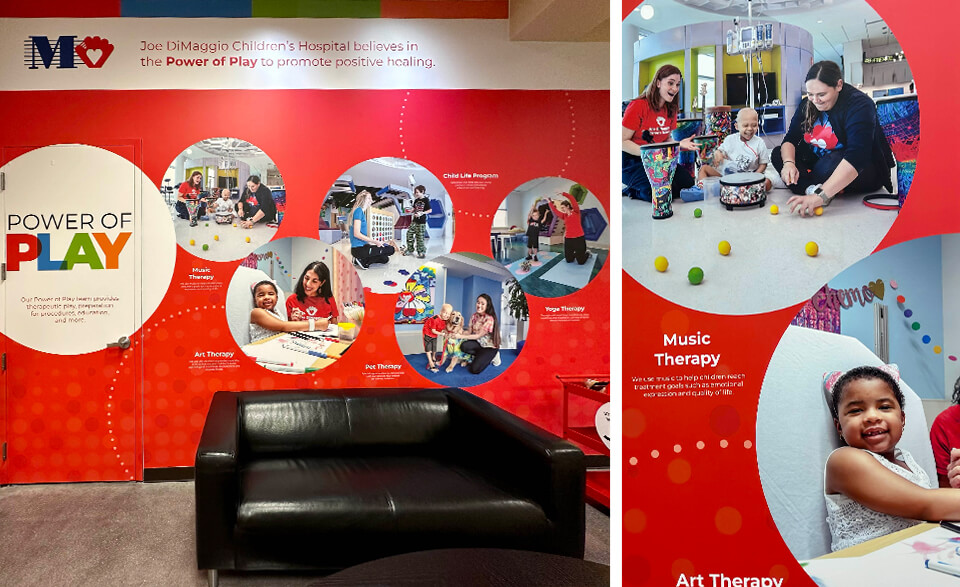
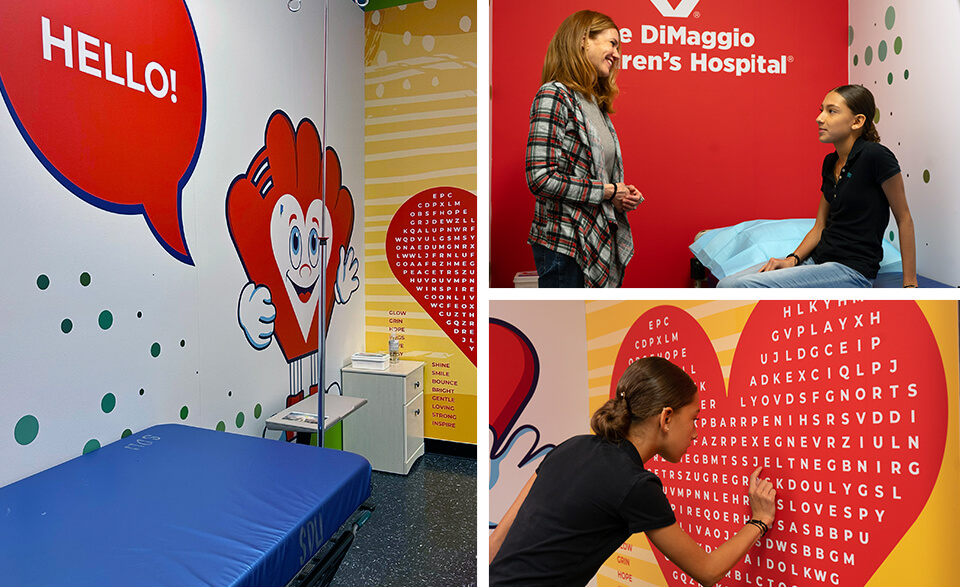
Catch The Love campaign components included campus signage, email and mail, mar-com collateral, dedicated campaign landing page and branded gifts for VIP donor events.

CTL Collage

The result?
$50 million dollars raised the first year: that’s 50% higher than the original year 1 goal.
The FULL 5-YEAR campaign goal was achieved by the end of Year 1!

Follow-Up Care: Love Builds Hope

After the ambitious expansion was completed, it was time to share the exciting new capabilities with all the people who made it possible, as well as the greater South Florida community. Starmark partnered with JDCH to brainstorm and plan a series of experiential brand-building and community relations events under the inspiring “Love Builds Hope” umbrella theme.

The theme, a natural extension of “Catch The Love”, celebrates the power of what love had built. Thousands more children would now experience new hope, healing and health thanks to what JDCH donors, staff, patients and families all built together.

Each Love Builds Hope event was customized to a particular audience’s needs and interests. These audiences included donors, community VIPs, hospital and government leadership, staff, South Florida pediatricians; non-profit partners, patients, families and the community at large.

JDC165 LoveBuildsHope Elevator 72x30 mech 01 Page 1 web
unnamed 5 web 700x468 1
DSC09418 web 700x467 1
DSC08348 1 web 700x467 1

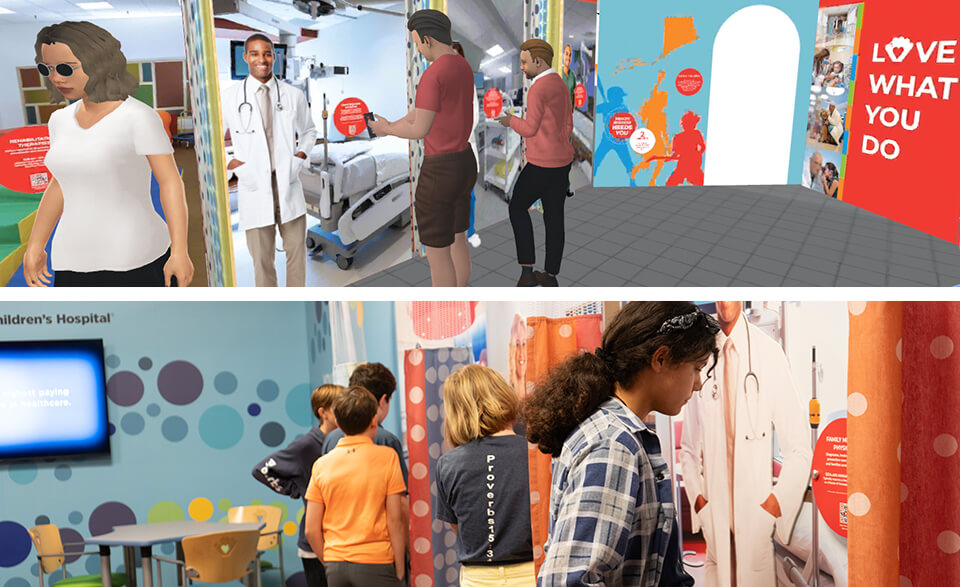
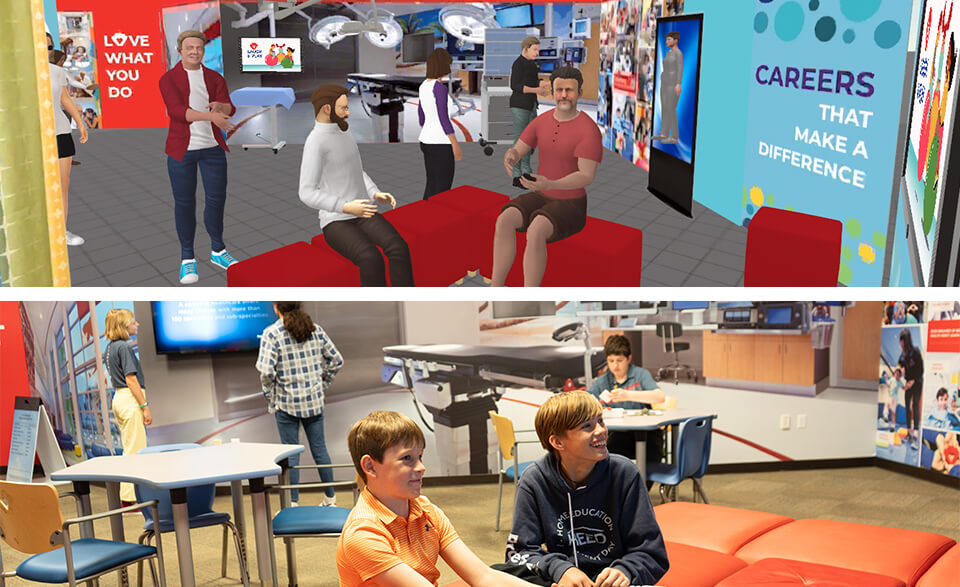
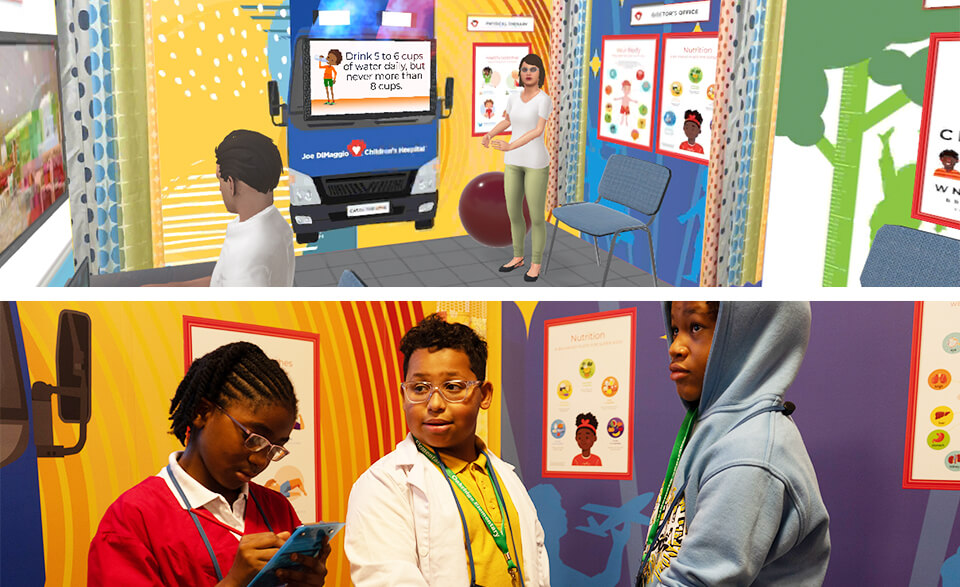
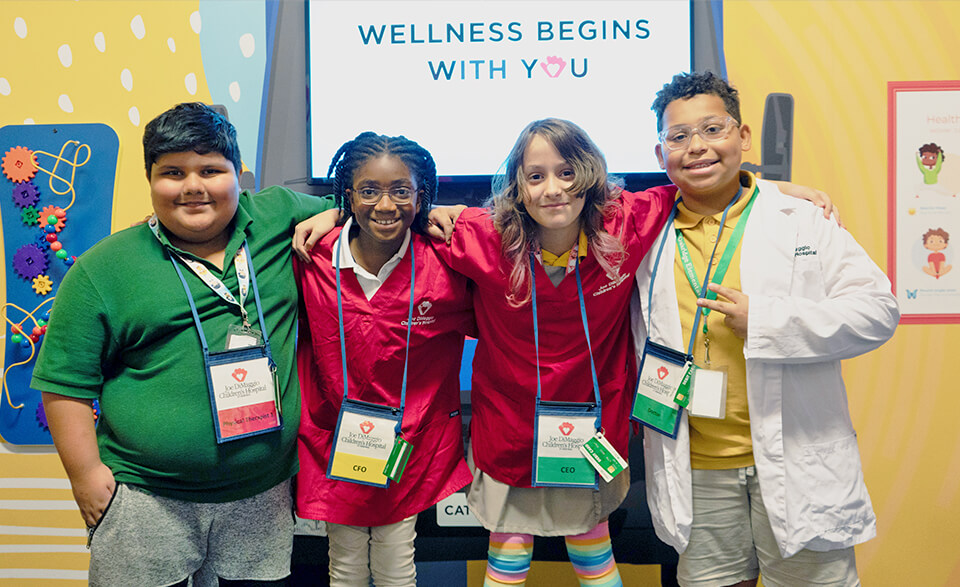
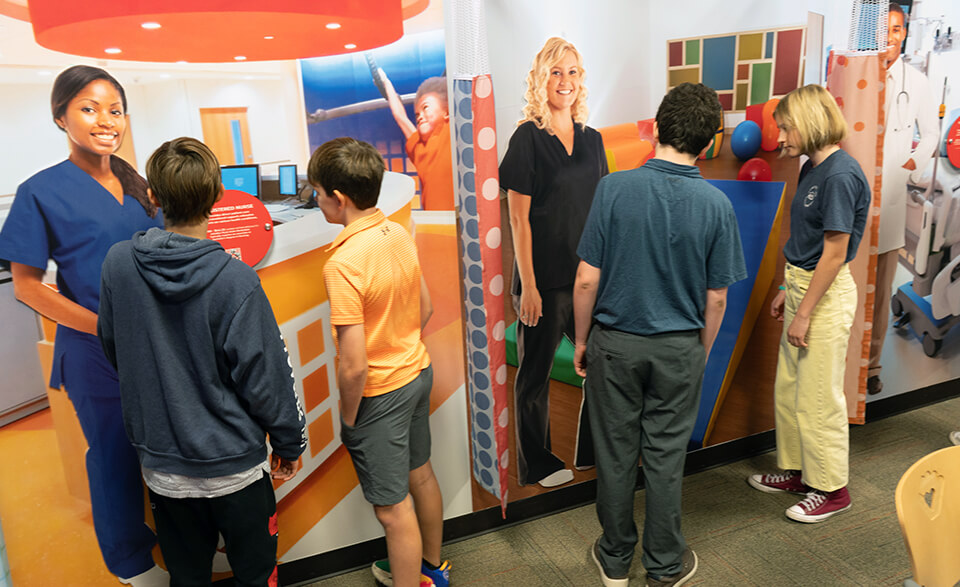
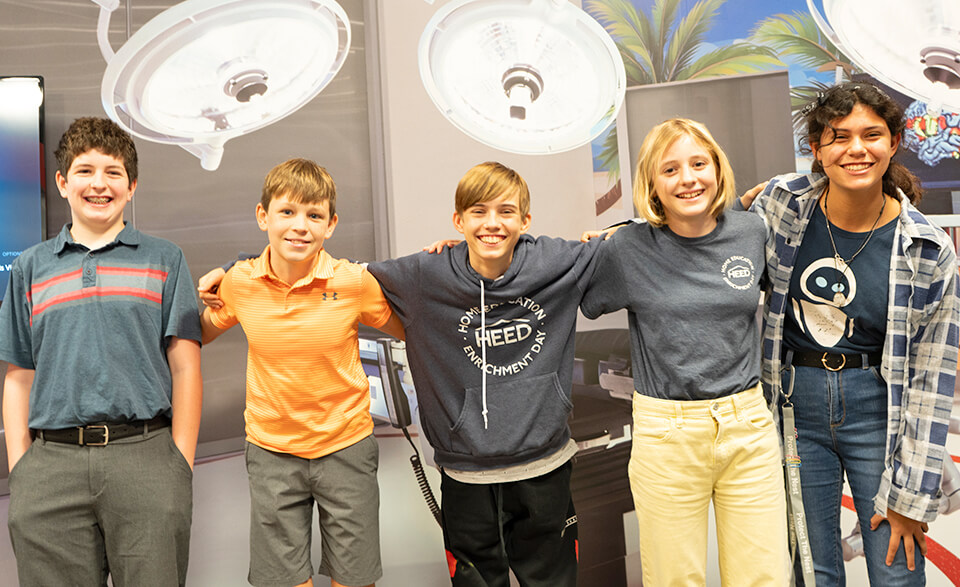
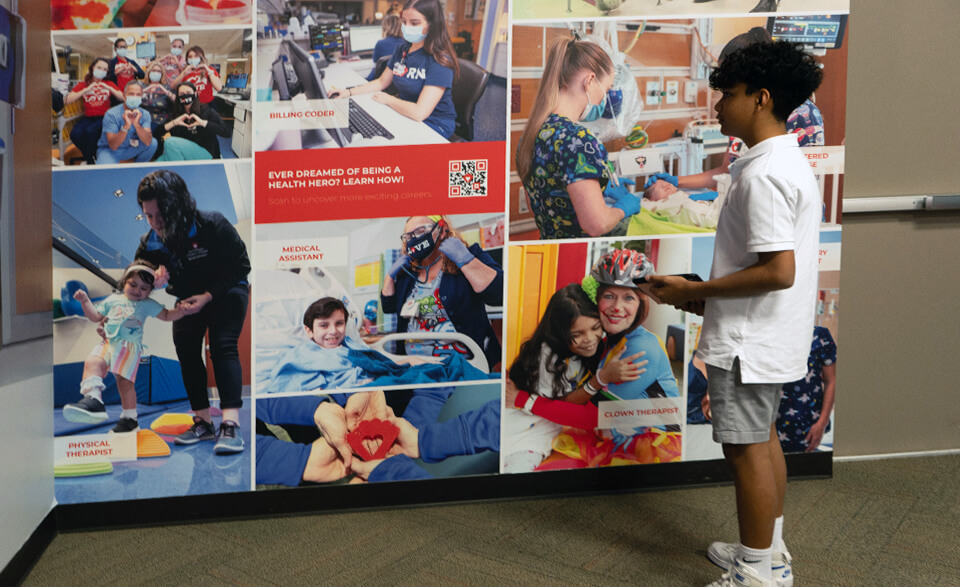
“Love Builds Hope” was embedded everywhere: in signage, food, drinks and activities. Indoor events offered all-access, personalized tours, including areas visitors rarely see. There were meet & greets with top pediatric surgeons and operating room tours with live demos of surgical tech.

DSC08743 web

Attendees strolled through expanded patient and family spaces. Interactive games and fun photo ops kept everyone engaged and sharing on social channels. Each guest left with a touching gift: art postcards hand-drawn by JDCH littlest patients. There was also a merch boutique with proceeds donated to the JDCH foundation.

Love Builds Hope Collage web

Patients, families and the greater South Florida community enjoyed their own celebration: an outdoor launch party with food, games, festivities and fun for little ones and adults alike.

JDCH

Robust Outcomes: Brand and Philanthropic Success

CATCH THE LOVE: $50 MILLION RAISED IN YEAR 1: MORE THAN 50% OVER ORIGINAL YEAR 1 GOAL
LOVE BUILDS HOPE: BIG BUSINESS IMPACT: BRAND BUILDING | COMMUNITY RELATIONS

Award-winning JDCH Love Builds and Catch the Love campaigns are just two of our many healthcare successes. Ask us about our community engagement, women’s health; U.S. veterans healthcare; rehab; long-term senior care; hospice; and other healthcare initiatives that reflect all life stages across the continuum of care. We’ve supported virtually every healthcare niche: let’s talk about driving more robust outcomes for yours!
Celebrating 15 years of eTips

Fifteen years ago, we tapped into our subject matter experts to document tips & tricks and answer frequently asked questions that we were getting from our clients. Since then, it has expanded into a platform for everything from reinforcing branding fundamentals to testing new technologies. Our team did a deep dive on the eTips analytics to pull our most popular. Drum roll please, as we reveal our top eTips:

15. QR Codes are dead, long live SMS

Back when Microsoft shut down its proprietary QR code reader service, we heralded the end of this tech. Little did we know a pandemic and Apple’s native camera integration would bring the QR code roaring back to popularity.

Read More

14. 10 Steps to the Perfect Visual Brand Identity

Years ago, we took the time to answer several frequently asked questions about visual branding. We still get similar questions when working with someone new, even today. And the tips in this article still hold up.

Read More

13. What’s the difference between AR, MR and Spatial Computing? Here’s why you should care.
When Apple launched ARKit, the Microsoft Hololens was still in vogue and the Magic Leap One came out, we were fielding tons of questions (and doing lots of polite corrections) about the differences between augmented reality, virtual reality, mixed reality and spatial computing. A lot more people must have had those questions, too, because this is one of our site’s top articles.

Read More

12. Damage Control for Bad Press

We wrote this article and a cheat sheet on the topic to help our clients navigate an emerging world of blogs, review sites and other sources of potential bad press. A lot has changed in the intervening years, but all that time has really just made online reputation management an even more important consideration for every business.

Read More

11. Does Google AdSense make sense for your blog or website?

Once upon a time, it wasn’t clear what sites should and shouldn’t be ad-supported using Google AdSense. Moreover, many people at the time didn’t even know you could simply add advertising to your site through Google.

Read More

10. Sell that first augmented reality project: Our 8-step guide to getting it done and getting promoted

This eTip turned into a full-blown how-to article. We wrote this around the time of Starmark’s 40th anniversary, and we have it on good authority that the tips in here have launched several new AR projects in the last five years.

Read More

9. Sponsored Editorial Content: The Blurring of Earned and Paid Media

Back before the ubiquity of Doctors hate her for this one weird trick, it was important for Starmark to educate our clients about the pros and cons of native advertising and sponsored content. From the vantage point of today’s internet, it’s hard to imagine a time before we took those blurred lines for granted.

Read More

8. 5 ways to build yourself as a brand

Brand is a topic that will get any marketer waxing philosophical. So, of course, this was one of the hot topics we tackled in the early days of eTips.

Read More

7. 6 Tips for Avoiding Nausea in Virtual Reality

In addition to being one of our most popular and helpful articles, our tips for avoiding nausea in VR article was the first eTip where we created an accompanying YouTube video.

Read More

6. Understanding Your Hierarchy Of Social Media Needs

It’s funny to look back at this, with all that has changed, and realize that many of the elements in this article still form the basis for a solid social strategy. The format, channels and considerations may be be different today, but the basic theory of this article holds up pretty well.

Read More

5. Focus on what consumers want with a focus group

Starmark has always been a research and data-driven organization. So it’s no surprise we tackled this topic early (eTip #26, believe it or not).

Read More

4. Social Influence, should you care?

With the advent of social media influencers as an industry, there are a whole host of new professional-grade tools to map and place value on social influence. But it’s fun to think back on a time when Klout was the end-all, be-all of social influence.

Read More

3. How to do Vanity URLs right

To this day, this simple article is one of our site’s top performers. It just goes to show that vanity URLs are just as important today — and just as hard to get right, apprently.

Read More

2. 9 Ways to Create Exclusivity

Another tip from our first couple years of eTip publications, this one is another fun testament to the fact that as much as things change, some advice is pretty durable.

Read More

And, the most popular eTip is:

1. 5 Key Features of the Facebook Timeline

Though the value of this eTip may have been lost to years of subsequent UI updates, we are proud to have performed our duty to inform our fellow internet denizens about what mattered most when Facebook first rolled out its Timeline update.

Read More

A Website Re-Do as Stunning as the Destination It Represents

Starmark has been agency of record for the Amelia Island Convention & Visitor Bureau for three years. In that time, we’ve become experts at expressing the brand and marketing the destination, including its website AmeliaIsland.com. At seven years old, the site was due for a comprehensive refresh — one that would balance strategy and analysis with creativity — and ultimately help consumers plan their trips to Amelia Island.

A strategic springboard

In order to achieve our client’s goal of becoming a best-in-class detention website, we started with an SEO audit and 150-page strategy to determine the best navigation, keywords and high-value pages based on user visits over the last 10 years. The audit revealed the high value/high priority pages that required the most attention from the team to build success.

AIC Website Strategy

Technical & Content Strategy  +  Audience Review & Journeys

The strategy also included content, analytic and technical performance audits of the current site; an extensive competitor review (32 tourism sites in all); along with a comprehensive content strategy to define the singular goal of each key section and/or page. This ensured content would logically align with a visitor’s needs and also improve SEO effectiveness. We then created an information architecture that demonstrated the current and recommended states of the entire website’s sitemap.

AIC Information Architecture IA Image

Information Architecture

Now that the technical and strategic needs were addressed, it was time to make it all look and sound beautiful — while ensuring functionality. We had a content migration plan as part of the strategy, and we leveraged a brand new photo/video shoot that Starmark delivered as part of the creative campaign the year before.

A hard-working site that looks and feels like paradise

Our bespoke UI design took readers on a visual journey through a breathtaking Amelia Island experience that was tailored to their individual needs and wants. Compelling features included unique micro-animations, videos and stunning imagery. Our design system and patterns ensured it was all cohesive and replicable to maintain a harmonious look and feel on desktop and mobile.

Design System

Design System

Design Patterns

Design Patterns

An in-depth analytics audit, which included user session history, search trends and click-path, revealed that users on the island were looking for different content than those that were not. To ensure they find exactly what they need and minimize clutter, we personalized the homepage content with the help of geo-location.

Travel Guide Slider

In order to migrate the 6,853-page site, we reviewed and organized all pages into four categories: pages that were duplicates, pages that could be migrated as is, pages that needed to be created as new, and pages that needed to be deleted. This extensive clean-up eliminated 6,102 pages, resulting in 841 pages on the new site, which included 425 business listings, 225 blog posts, and 146 events. The next step was to architect a database that organized the business listings into categories and tags, allowing us to filter the listings and further optimize the site.

Starmark’s writing team crafted 25 high-value pages of informative, SEO-driven copy that told the story of Amelia Island brand’s eloquent tone and voice. We also wrote the introductory copy for all 10 of the site’s Travel Guides, which invited the reader to immerse themselves into each unique experience.

The next wave

Dynamic, immersive and highly effective, the new AmeliaIsland.com website launched in October 2023; and feedback from the industry and our media partners so far has been highly complimentary. But our work is never done. As we host and manage the site, we continue to measure and optimize as needed with ongoing content marketing, search engine optimization, and performance optimization programs. The strategy is informed by the topics our targets are searching for and ensures we continue to provide fresh, relevant content for users as well as search engines.

The new AmeliaIsland.com website was an exciting opportunity for Starmark to build upon its partnership with the Amelia Island CVB. The website introduced inspirational new ways to showcase the breadth and depth of the destination. As a result, Amelia Island is on target to achieve record-setting visitation numbers for the third year in a row.

— Paul Beirnes, Vice President, Amelia Island Convention & Visitors Bureau

Now Open: Boggy Creek goes even bigger in VR

Following the success of the attraction’s first foray into VR for B2B sales, Boggy Creek Airboat Adventures has worked with Starmark to expand its footprint in VR. What we’re calling Boggy Creek 2.0 includes an overhauled sales experience for travel planners and made it publicly accessible for the first time.

Improving on a winning formula

The original version of the Boggy Creek VR experience was created as a way to bring Boggy Creek to travel planners around the world during the travel disruptions of the global pandemic. Now on the heels of a Best in Show win at the 2023 Flagler Awards, the new version of Boggy Creek VR launches to the public.

Taking Boggy Creek to the wider world

While this new and improved version is still primarily used as a tool to book more group sales, it will also be persistently available as a meta theme park within the Engage Metaworld. Now visitors from any continent can visit Boggy Creek in VR before deciding to come in person.

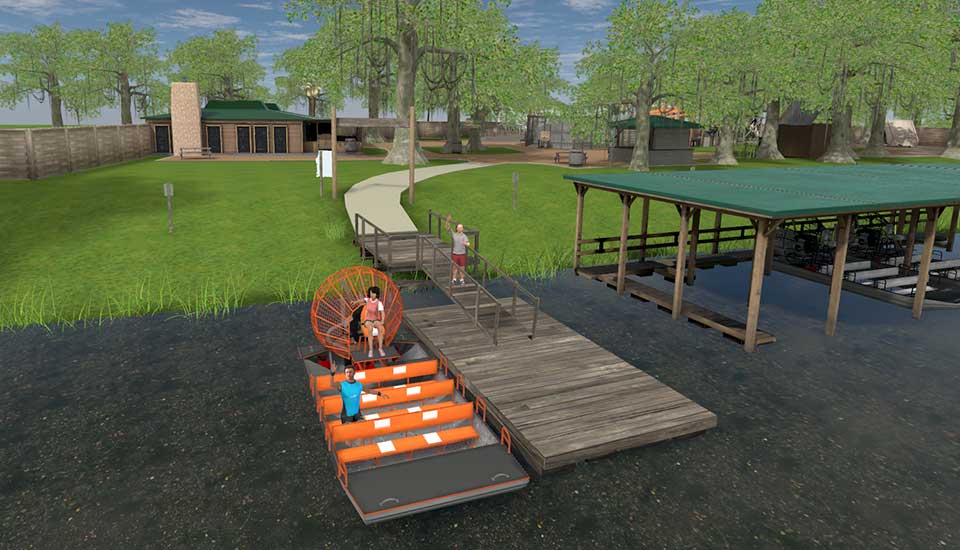
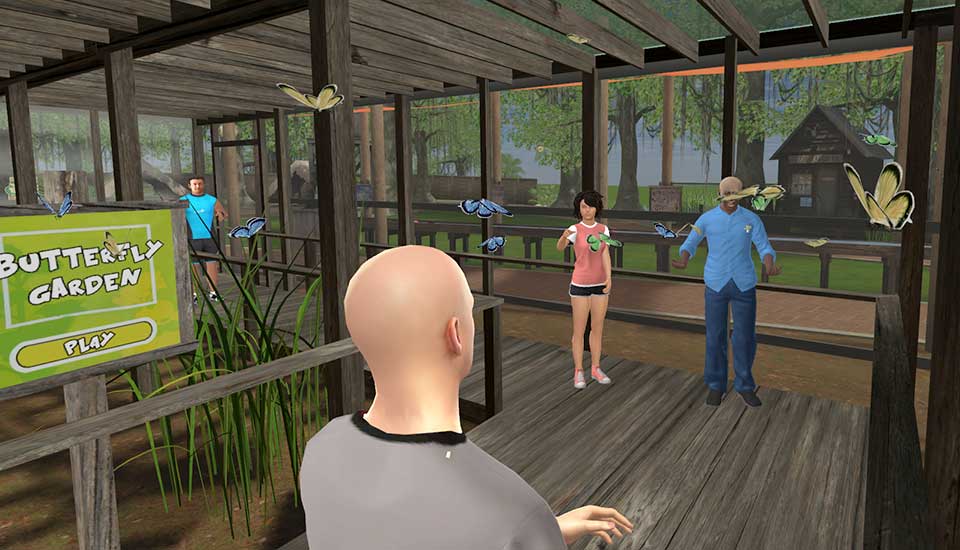
Like version 1.0, this new version is still anchored by our two-minute airboat experience, where visitors can sit in a scale recreation of one of the airboats for a VR-enhanced video showing all the park has to offer. As the video plays, VR airboats zoom across the Everglades waters in front of the viewer, gators gather around the boat and butterflies flutter past.

The Starmark team also added VR recreations of signage throughout the grounds, like education about Everglades birds, a history wall about Kissimmee and a gator guide photo op.

BOG VR Park Overview
BOG VR Cutout Sign

More lifelike than ever

Boggy Creek VR 2.0 takes advantage of additional optimizations to create a lifelike experience that runs great on widely available headsets, like the Meta Quest 2. On more powerful VR devices and desktop versions of Engage, the visual fidelity is even higher. Hear birds chirp in 360 degree sound, listen to the wind, watch the sun disappear behind trees and beams. It all adds up to an experience that’s more immersive than before.

Animal trainers and educational experiences

The new Boggy Creek VR 2.0 features completely new interactions for visitors — and some major enhancements to current ones. The previous version included a butterfly garden, but the new version more realistically captures the in-park experience with a screen-enclosed setting full of accurate recreations of the native Florida plants that serve as food sources. Several different species of butterfly are represented, showing the incredible variety of species native to the state.

Similarly, throughout the park, watchful VR visitors will see other native species, like the birds that make the park their home in real life.

And speaking of critters, Starmark also overhauled the Alligator area, creating an enclosure more like the one visitors experience at the Kissimmee attraction — as well as adding lots more immersion to the fossil and gem mining flume. Now visitors can really hear the water rush — and even pick up the gems.

BOG VR Butterfly Garden
BOG VR Alligator Pit

The Starmark team also added real Boggy Creek animal trainers to this version. Visitors can give themselves a self-guided tour of the attraction by launching dimensional avatar recordings that are modeled after the real animal trainers at the park.

This is one of our most immersive VR projects to date. We’ve loved the opportunity to work with such a forward-thinking partner, and we can’t wait to see how we can bring more and more business opportunities to life through VR.

— Brett Circe, Starmark Chief Digital Officer

A real-world reward for VR visitors

To publicize the public launch, Starmark created a new page about this VR experience on the Boggy Creek website, as well as organic social assets the park’s team can add to its feed. It’s all part of our effort to create a stronger connection between the virtual world and the real one. In fact, when you go check out Boggy Creek in VR for yourself, you’ll see we’ve included a way to win a real-life reward for your real-life tour of Boggy Creek hidden within the VR experience — namely a coupon code for a free gem and fossil mining experience. This new addition provides a clear way to track engagement between the VR experience and real visitors at Boggy Creek.

BOG VR Animal Trainer
BOG VR Gem Mining

The Boggy Creek VR Experience is available on every major VR headset (including the new Meta Quest 3), Mac, PC and Chromebook computers. You can also access it on phones and tablets running the Engage iOS and Android app. You can always find the entrance to Boggy Creek on the top floor of the Enterprise plaza in the Engage Metaworld.

New CHS website brings home prestigious Aster Award

The recently renovated Catholic Health Services website just won major 2023 accolades — a bronze Aster Award, one of the healthcare industry’s most prestigious marketing awards.

The new site features a thoroughly researched and completely overhauled information architecture, navigation and approach to design, putting user experience at the center of the design process. After all, people who are using a hospital site are usually doing so at very challenging times in their lives. The new site acknowledges this reality, making it far easier for visitors to find what they are looking for.

Says Linda Lamers, Senior Director of Marketing/Communications for CHS, “Winning this award is not just about the recognition but also about the impact our website has made on our users and the broader online community. It demonstrates that our dedication to providing an exceptional user experience, innovative design, and top-notch functionality has not gone unnoticed.”

Content for the new site is also reorganized around Catholic Health Services’ commitment to a lifelong continuum of care. This reorientation brings the site in line with the larger mission of the entire CHS system.

Winning this award is not just about the recognition but also about the impact our website has made on our users and the broader online community. It demonstrates that our dedication to providing an exceptional user experience, innovative design, and top-notch functionality has not gone unnoticed.

— Linda Lamers, Senior Director of Marketing/Communications for CHS

About the Aster Awards

The Aster Awards is one of the largest and most respected national/international competitions of its kind. This elite program has recognized outstanding healthcare professionals for excellence in their advertising & marketing efforts for over 20 years.

All awards were issued for entries that received top marks from judges placing them in the top 16% of the nation for advertising excellence. Judging criteria included creativity, layout and design, functionality, message effectiveness, production quality and overall appeal and execution.

For more about the Aster Awards, visit asterawards.com.